15 Best Kitchen Organization Tools Under $50: Budget-Friendly Solutions for Every Cabinet and Drawer
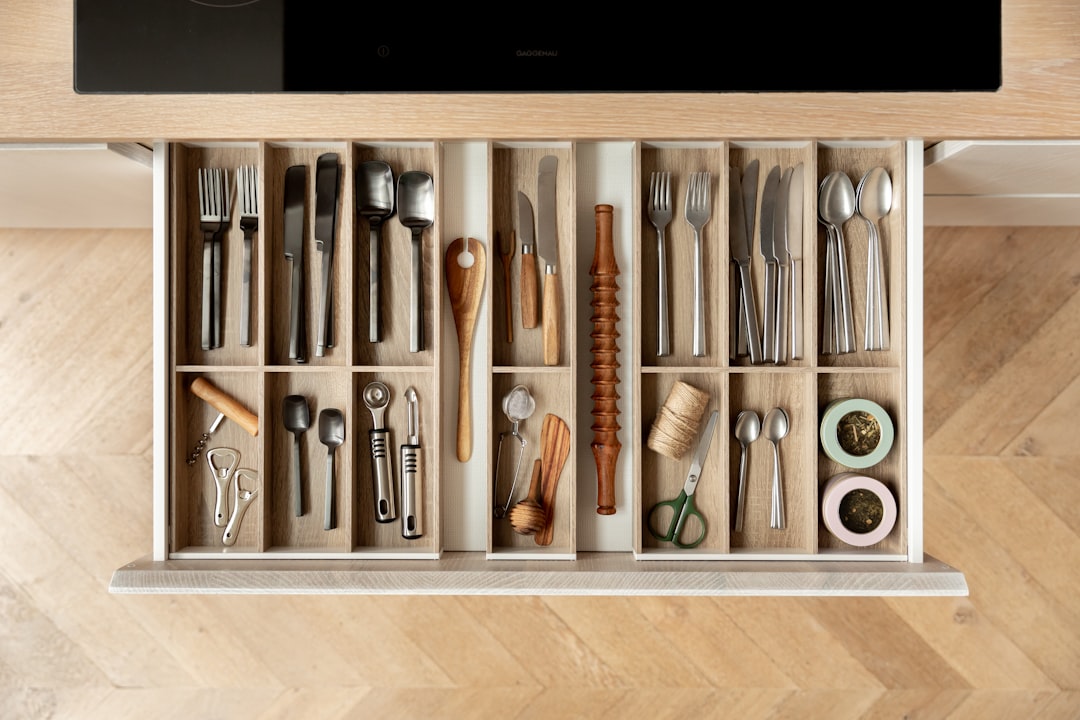 Photo by Daiga Ellaby on Unsplash
Why Kitchen Organization Tools Matter
A messy kitchen slows everything down. You spend three minutes hunting for the vegetable peeler, knock over a bottle of olive oil reaching for the garlic powder, and by the time you actually start cooking, your motivation has already taken a hit.
The fix is simpler than most people think, and cheaper too.
Good kitchen organization tools don’t just tidy things up. They change how you cook. Meal prep gets faster. Grocery runs get smarter because you can actually see what you have. The mental load of cooking drops when everything is where it belongs.
And here’s the thing: you don’t need to spend a lot to make a big difference. Every single tool in this roundup comes in under $50. Some are well under $20. We’re talking drawer dividers, turntables, canisters, shelf risers, and more. Real solutions for real kitchens, whether you’re working with a galley apartment layout or a sprawling suburban setup.
This guide covers every zone of your kitchen: drawers, cabinets, pantry, under-sink, and small-space solutions. By the end, you’ll know exactly what to buy first.
Drawer Dividers and Organizers: Maximize Your Storage Space
Drawers are where kitchen chaos lives. It doesn’t matter how big your kitchen is. If your drawers are a mess, cooking feels like a mess too.
The foundation of any solid kitchen organization system starts here.
Why drawers matter so much
Drawers are high-frequency zones. You open them dozens of times a day. Every extra second it takes to find a spatula or a measuring spoon adds up. Worse, when drawers are overcrowded and disorganized, tools get damaged. Knives dull faster. Utensils tangle. Small items get buried.
Drawer dividers solve all of this with almost no effort.
Utensil drawers
For your main cooking utensil drawer, adjustable bamboo dividers are the move. These expand to fit drawers of different widths, so you’re not stuck buying something that doesn’t fit. Look for options with at least four compartments: one for large cooking tools, one for small utensils, one for spatulas and tongs, and one flex space for whatever doesn’t fit elsewhere.
The adjustable format matters more than most people realize. Kitchen drawers are not standardized. A fixed-size organizer will leave awkward gaps or won’t fit at all. Adjustable dividers remove that headache entirely.
Flatware and silverware drawers
For a dedicated silverware drawer, use a proper tray-style organizer. The bamboo utensil tray option is a solid pick here. It keeps forks, knives, and spoons in separate slots without them rattling around. Bamboo also looks clean and doesn’t trap grime the way plastic can.
Standard tip: always put the most-used items in the front slots. You shouldn’t have to dig for your everyday fork.
Junk drawers
Yes, you’re allowed to have one. But it should still have some structure. A few small compartments, a section for batteries, one for rubber bands and twist ties, one for takeout menus or pens. A basic expandable divider set handles this perfectly. The goal isn’t perfection, it’s containment.
Best practices
Remove everything from the drawer first. Group items by category. Only put back what belongs in that drawer. Anything that doesn’t have a home needs a decision: find it a home, donate it, or toss it. Then install your dividers and fill them intentionally.
Turntables and Rotating Caddies: Easy Access to Daily Items
Turntables are one of those tools that seem almost too simple. A spinning tray. That’s it. But once you have one in a cabinet or on a countertop, you’ll wonder how you managed without it.
What makes turntables so useful
The problem with standard cabinets and shelves is depth. Things get pushed to the back and forgotten. You lose track of what you have. You buy duplicates. You let things expire. A turntable solves this by letting you spin everything to the front with one easy motion.
No more pulling out six bottles of hot sauce to get to the one behind them.
Spices and condiments
This is the classic use case. A large lazy susan turntable in your spice cabinet lets you see every bottle at a glance and spin to any one instantly. Go for an 18-inch diameter if your cabinet has the depth. If you’re working with tighter shelves, a smaller 10 or 12-inch works too.
The same idea applies to your fridge door and countertop. A small turntable with condiments, oils, and vinegars next to your stove makes cooking dramatically more fluid. Everything is within reach with a quick spin.
Under-sink storage
Turntables aren’t just for food. A lazy susan under the sink is excellent for cleaning supplies. Products get pushed back under there constantly. A turntable means you can always access what you need without getting down on your hands and knees and digging.
Small kitchen advantages
In compact kitchens, corner cabinet space is often wasted because it’s awkward to reach. A corner turntable reclaims all of that space. It transforms a frustrating dead zone into genuinely useful storage.
For small kitchens especially, the ROI on a single turntable is surprisingly high. Less wasted food, faster cooking, better use of space.
Clear Canisters and Pantry Containers: See-Through Storage Solutions
Opaque containers hide things. Clear containers show you what you have. That sounds obvious, but the difference in how you shop and cook is real.
Transparent beats opaque, every time
When your dry goods are in clear airtight canisters, you can tell at a glance that you’re running low on rice before you start cooking, not during. You can see that the pasta you thought you had is actually almost gone. You stop buying duplicates of things you already have plenty of.
This visibility directly impacts your grocery runs. A well-organized, see-through pantry is also easier to keep clean because you can spot expired or stale items quickly.
What to store in canisters
Cereal, oats, pasta, rice, flour, sugar, lentils, dried beans, coffee beans, granola, breadcrumbs. Anything that comes in a bag or box benefits from being transferred into an airtight container. The airtight pantry canisters that come in sets with multiple sizes are your best bet. You get a range of volumes to match different ingredient quantities.
Airtight seals matter here. They keep food fresh longer, keep bugs out, and prevent the stale smell that can develop in pantries.
Stackable options
Square or rectangular canisters stack better than round ones. This matters a lot in deep cabinets where vertical space is available. Stacking doubles your effective shelf space. Look for flat lids that lock securely so stacks stay stable.
Labeling
Clear containers make contents visible, but labels take it further. You’ll know you’re looking at flour versus powdered sugar. Use a label maker, chalkboard labels, or even a simple strip of masking tape with a marker. Include the date you filled the container if food freshness is a concern.
A well-labeled, clearly organized pantry is one of the highest-impact kitchen upgrades you can make. Everything becomes easier: cooking, meal planning, shopping lists, even handing off kitchen duties to another person.
Under-Sink and Cabinet Organization: Hidden Storage Solutions
Under-sink cabinets are almost universally ignored until something falls over and makes a mess. The plumbing creates awkward dead zones. Items pile up without any system. Cleaning supplies end up scattered and hard to find.
This is fixable without a renovation.
Making the most of awkward spaces
The key is vertical thinking. Most under-sink cabinets have far more vertical space than people use. Stackable and tiered organizers let you build upward and reclaim all that empty air.
Expandable shelf risers are perfect here. They create two usable levels in a space that currently only has one. Place bottles and sprays on the upper tier. Keep smaller items, sponges, scrubbers, and brushes on the lower level. Everything stays visible.
Pull-out organizers
For under-sink storage specifically, pull-out organizers are a game changer. The sliding under-sink organizer style lets you pull the entire tray out toward you so you can see and grab items from the back without crouching and digging. It wraps around plumbing pipes, which is a detail that matters for this particular cabinet type.
This kind of organizer also works well in base cabinets for pots, pans, and lids.
Preventing spills and water damage
Under-sink cabinets are moisture-prone zones. Use organizers with raised edges or lips to contain any drips or leaks from bottles. This protects the cabinet floor and prevents cleaning product residue from building up.
Food vs. cleaning supplies
Keep a strict separation. Cleaning supplies and food should never share a cabinet. Under-sink is for cleaning products, dish soap, trash bags, and similar. Pantry and food-adjacent cabinets are for food only. This is especially important in homes with kids or pets.
Small Kitchen Organizers: Maximizing Tight Quarters
Small kitchens force creativity. When counter space is limited and cabinet space is scarce, you have to think in three dimensions. Up, out, and behind doors.
Vertical storage
The walls are your best friend in a small kitchen. Magnetic strips, hooks, and mounted organizers turn vertical surfaces into functional storage. A set of adhesive magnetic spice strips mounts on any wall or the side of the refrigerator with no drilling required. Spice jars with metal lids or caps attach directly to the strip.
This frees up cabinet or counter space that those spice jars were occupying. In a small kitchen, that space reallocation matters.
Magnetic strips also work for knives, metal measuring spoons, and small metal tools. You can build a whole little tool station on a wall strip that would otherwise be completely wasted space.
Door-mounted organizers
The back of cabinet doors is massively underutilized. Over-the-door organizers with pockets or racks can hold spice jars, foil and wrap boxes, small snacks, cutting boards, and more. These mount with hooks or screws and add storage without taking up any shelf space at all.
For renters, look for command hook compatible options. No permanent installation required.
Multi-functional tools
In a small kitchen, every tool should earn its place. A colander that doubles as a bowl, a cutting board with a built-in strainer, measuring cups that nest perfectly. The fewer single-use items cluttering your drawers, the more breathing room you have.
This thinking applies to organization tools too. Adjustable dividers that work in multiple drawers are smarter than buying a different fixed tray for each space.
Bonus: declutter before you organize
This is the small kitchen tip that people skip. Before you buy any new kitchen organization tools, remove everything from your cabinets and drawers. Get rid of duplicates, expired pantry items, and tools you never actually use. Organizing a cluttered kitchen just moves the clutter around. Organizing a decluttered kitchen actually works.
Once you know exactly what you’re working with, every organizing purchase becomes more targeted and effective. You might find you need less than you thought.
And if you’re doing a full kitchen refresh, the tools that live in your drawers matter too. Picking the right utensils for your cooking style (like a quality vegetable peeler or a reliable silicone spatula) means you’re only keeping tools you’ll actually use, which makes organizing them that much easier.
FAQ: Common Questions About Kitchen Organization Tools
What are the best organization tools for renters who can’t drill?
Great news: most of the best kitchen organization tools require zero drilling. Adjustable drawer dividers, turntables, canisters, and shelf risers install with no tools at all. For wall-mounted options, adhesive magnetic strips and command hook compatible organizers work well without permanent installation. The adhesive magnetic spice strips mentioned above are specifically renter-friendly.
How do I organize a kitchen with limited cabinet space?
Start by ruthlessly editing what lives in your cabinets. Remove anything you rarely use. Then focus on vertical space: use shelf risers to create two levels in tall cabinets. Add a turntable to deep cabinets to eliminate dead corners. Use door-mounted organizers to add storage behind cabinet doors. Stack clear canisters to maximize pantry shelf height. Every inch counts when space is tight.
What’s the difference between drawer dividers and pull-out organizers?
Drawer dividers sit inside a drawer and create fixed sections within it. They’re for organizing items that already live in drawers like utensils, silverware, or junk drawer contents. Pull-out organizers are typically used inside cabinets. They slide on rails or casters and let you pull the entire contents of a cabinet shelf out toward you for easy access. Both are valuable but solve different problems.
Can kitchen organization tools help with meal planning and grocery shopping?
Yes, significantly. Clear pantry canisters and well-organized shelves mean you always know what you have on hand. This directly improves grocery list accuracy. You stop buying things you already have. You catch what you’re running low on before you need it. A well-organized fridge and pantry makes meal planning faster because you can take inventory at a glance rather than digging through shelves to figure out what’s there.
How often should I reorganize my kitchen to maintain an organized system?
A full kitchen reorganization once or twice a year is usually enough. But maintaining the system is a daily habit. Put things back where they belong. Don’t let surfaces become dumping grounds. Do a quick five-minute reset after heavy cooking sessions.
If you find yourself constantly fighting against your system, that’s a sign the system needs adjustment, not that organization doesn’t work for you. Sometimes a drawer that holds utensils would work better as a baking tools drawer, or vice versa. Kitchen organization tools should fit how you actually use your kitchen, not some ideal version of it.
The goal is a kitchen that makes cooking feel easier and more enjoyable. With the right tools and a bit of intention, that’s genuinely achievable for any budget and any kitchen size.